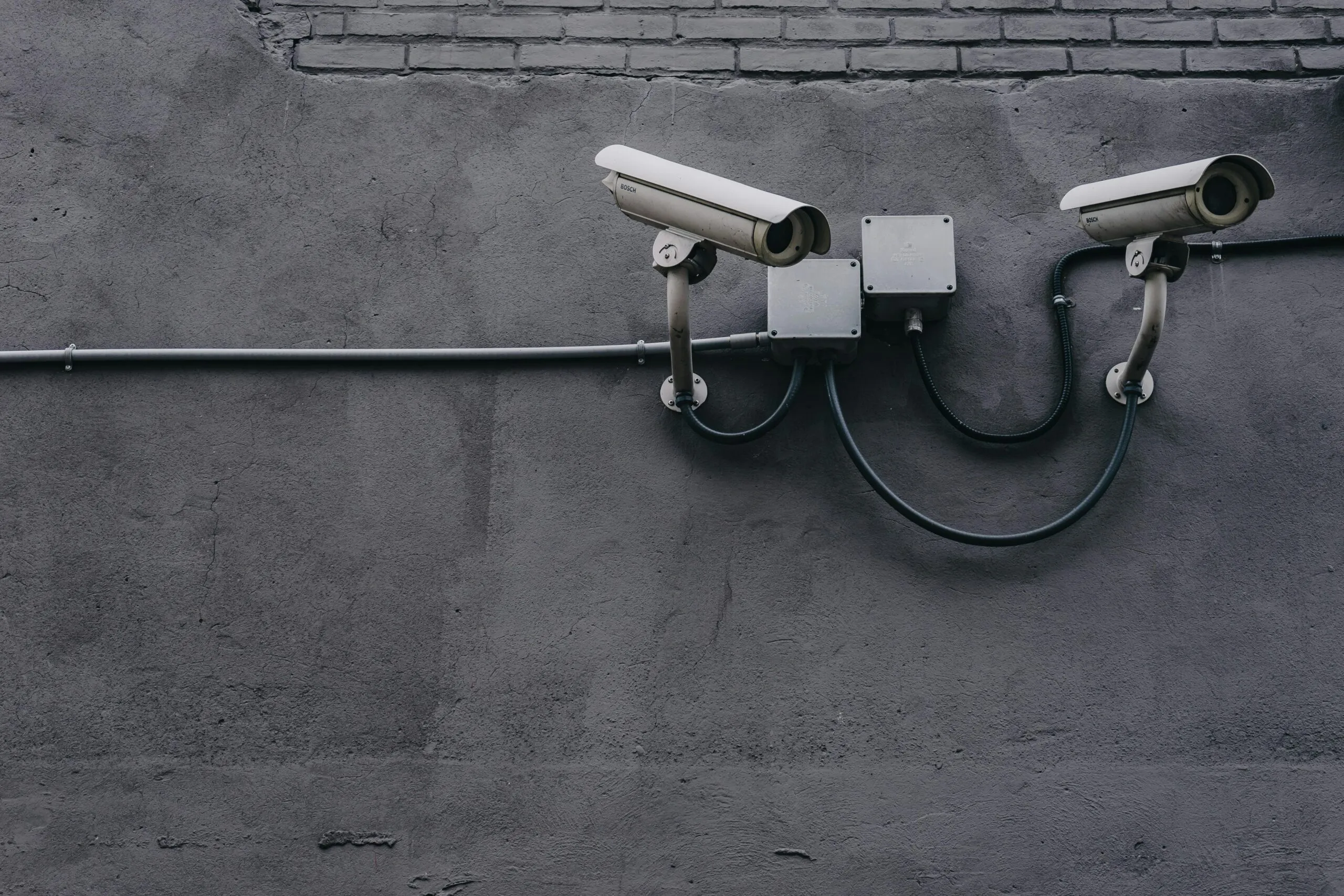
Counter-surveillance is the work of finding out whether someone is watching, following or listening to you, and then stopping it. It has three parts: noticing the people and vehicles that keep appearing, checking rooms, cars and devices for hidden equipment, and changing the habits that make you easy to watch. Almost every serious attack on a person, from a burglary to a kidnap, starts with someone watching them first, so spotting the watcher is the best chance to stop it.
For most people, counter-surveillance means awareness and a few habits. For people with a public profile, a dispute or significant wealth, it is part of the daily work of close protection officers who watch for surveillance on every journey. This guide explains the signs, the techniques and what a bug sweep involves.
What Is Counter-Surveillance?
Surveillance is watching someone to learn their routine: where they live, when they leave, which route they take and who they meet. Counter-surveillance is the effort to detect that watching and to deny the watcher what they want.
Security professionals separate two things:
- Surveillance detection is noticing that you are being watched or followed, by people, vehicles or cameras.
- Technical surveillance countermeasures (often called a bug sweep) are searches for hidden listening devices, cameras and trackers in rooms, vehicles and phones.
Both start from the same question: who would want to watch you, and why? A person in a bitter divorce, a business in a dispute, a family with a public profile and a celebrity followed by photographers face very different watchers. A personal risk assessment answers that question first, so the effort goes where the risk is.
Who Watches, and Why
The people who carry out surveillance range from the amateur to the highly skilled:
- Criminals planning a burglary, a robbery or a kidnap, who need to know when a house is empty or where a person is predictable.
- Stalkers and fixated individuals, who may follow someone for months.
- Journalists and photographers looking for a story or a picture.
- Private investigators acting in a divorce, a custody dispute or a business case.
- Competitors and insiders after commercial information, sometimes through a member of staff. Our article on the behavioural indicators of insider threats covers that risk.
The phone hacking scandal, which led to the closure of the News of the World in 2011, showed how far some people will go to listen in on the private lives of public figures. Intercepting someone’s calls or messages without lawful authority is a criminal offence in the UK, but the law does not stop everyone.
Signs You Are Being Watched or Followed
Surveillance is hard to spot in a single moment and easier to spot over time. The test professionals use is simple: the same person or vehicle seen at different times, in different places, with no good reason to be there.
- The same face or car, more than once. A car parked near your home that appears again near your office, or a person you saw on the train who is now in the café.
- People who do not fit. Someone sitting in a parked car for a long time, or loitering where nobody else waits.
- Movement that mirrors yours. Someone who stops when you stop, changes direction when you do, or hurries to keep up and then slows.
- Interest in your home. Unknown people photographing the house, asking neighbours or staff about your routine, or calling with an excuse to check who is in.
- Information that should not be known. Someone turning up at a private event, or a journalist knowing something you discussed only in your home or car.
- Changes to your devices or car. A phone that behaves oddly, unfamiliar accounts or devices linked to yours, or a small box fixed under the car.
One sighting proves nothing. Write down what you saw, when and where, with a description and a number plate if you have it. A pattern across several entries is what matters.
How Surveillance Detection Works
Professionals do not wait for a watcher to give themselves away. They make the watcher’s job harder and create moments where a follower has to show themselves.
Planned Routes
A surveillance detection route is a journey planned to expose anyone following. It includes natural stops, changes of direction and places where a follower must either commit or drop back, such as a quiet street, a long straight road or a building with one entrance. It should look like an ordinary journey, because a person who drives erratically tells the watcher they have been seen.
Watching the Watchers
On a protected journey a second person or vehicle may hang back and watch who moves when the principal moves. Close protection teams also look at a venue or route before the person arrives, so that anyone already waiting there stands out.
Fewer Patterns
The simplest countermeasure is to be less predictable: vary the times and routes of regular journeys, avoid announcing plans in advance, and do not post your location until you have left. Our guide to the security risks VIPs face explains how routine and social media expose people.
What Is a Bug Sweep?
A bug sweep, known in the industry as technical surveillance countermeasures (TSCM), is a search of a room, a vehicle or a device for hidden listening devices, cameras, GPS trackers and software that monitors a phone. Specialists combine a careful physical search with equipment such as radio frequency detectors, which pick up transmitting devices, and non-linear junction detectors, which find electronic components even when a device is switched off. They also check phones and laptops for unwanted apps, linked accounts and settings that share location.
A sweep looks at the places a device is easiest to hide and to power: light fittings, smoke detectors, sockets, picture frames, soft furnishings, the dashboard and underside of a car, and gifts brought into the house.
A sweep shows whether something is there at the time of the search. It cannot show that nobody will plant a device tomorrow, so it works best alongside control of who comes into the house, the office and the car. If you think you need one, choose a specialist and ask what equipment they use, what the search covers and what their report will tell you.
Do not buy a signal jammer. Using a jammer is illegal in the UK, and it blocks your own calls and alarms as well as any device.
Protecting Your Phone and Home
Most modern surveillance needs no hidden microphone. A phone that shares its location, a shared cloud account or a social media post often gives away more than any bug.
- Check which apps and people can see your location, and turn off what you do not need.
- Review the devices signed in to your email, cloud and messaging accounts, and remove any you do not recognise.
- Use a separate, private email address and phone number for close family and staff.
- Control who has keys and alarm codes, and change them when staff leave.
- Keep a log of contractors and visitors to the house, with the dates they were there.
- Brief household staff not to discuss the family’s plans with anyone who asks.
Our guide to staying safe from phone snatchers in London has more on protecting the phone itself.
What to Do If You Think You Are Being Watched
- Do not confront anyone. You may be wrong, and if you are right, you have told the watcher you know.
- Keep a log. Dates, times, places, descriptions and number plates. Photograph a vehicle only if you can do so safely.
- Call the police if you feel in danger or someone is following you now. Dial 999 in an emergency.
- Do not discuss your suspicions in the rooms, car or devices you think may be compromised.
- Get independent advice. Someone outside the situation can judge whether the pattern is real and what is proportionate. That may be independent security advice, a sweep by a specialist, or protection for a period while the risk is assessed.
FAQs
How can I tell if someone is following me?
Look for the same person or vehicle at different times and places, with no reason to be there. Make a natural stop or change of direction and see who changes with you, without making it obvious. One sighting means little; a pattern means a lot. If you feel in danger, go somewhere busy and call 999. Keep a log of what you see.
What is a bug sweep?
A bug sweep, or technical surveillance countermeasures, is a search of a room, vehicle or device for hidden microphones, cameras, trackers and monitoring software. Specialists combine a physical search with detection equipment and check phones and accounts. A sweep shows what is there on the day, so it works best alongside firm control of who has access to the house, office and car.
Is it legal to use a signal jammer to stop surveillance?
No. Using a signal jammer is illegal in the UK. Jammers also block your own calls, alarms and emergency services, so they create risk rather than remove it. The lawful answers are a professional sweep, better control of who has access to your home and car, and tighter settings on your phone and online accounts.
Do close protection officers carry out counter-surveillance?
Watching for surveillance is part of a close protection officer’s everyday work. They plan routes, check venues in advance, watch who moves when the person they protect moves, and keep the routine less predictable. Searching rooms and vehicles for hidden devices is specialist technical work, carried out by sweep specialists with their own equipment.
What to Do Next
If you think someone has taken an interest in you or your family, take it seriously and get advice early. Find out how close protection for you and your family keeps journeys and routines less predictable, or talk to us about security advice on a suspected surveillance problem.