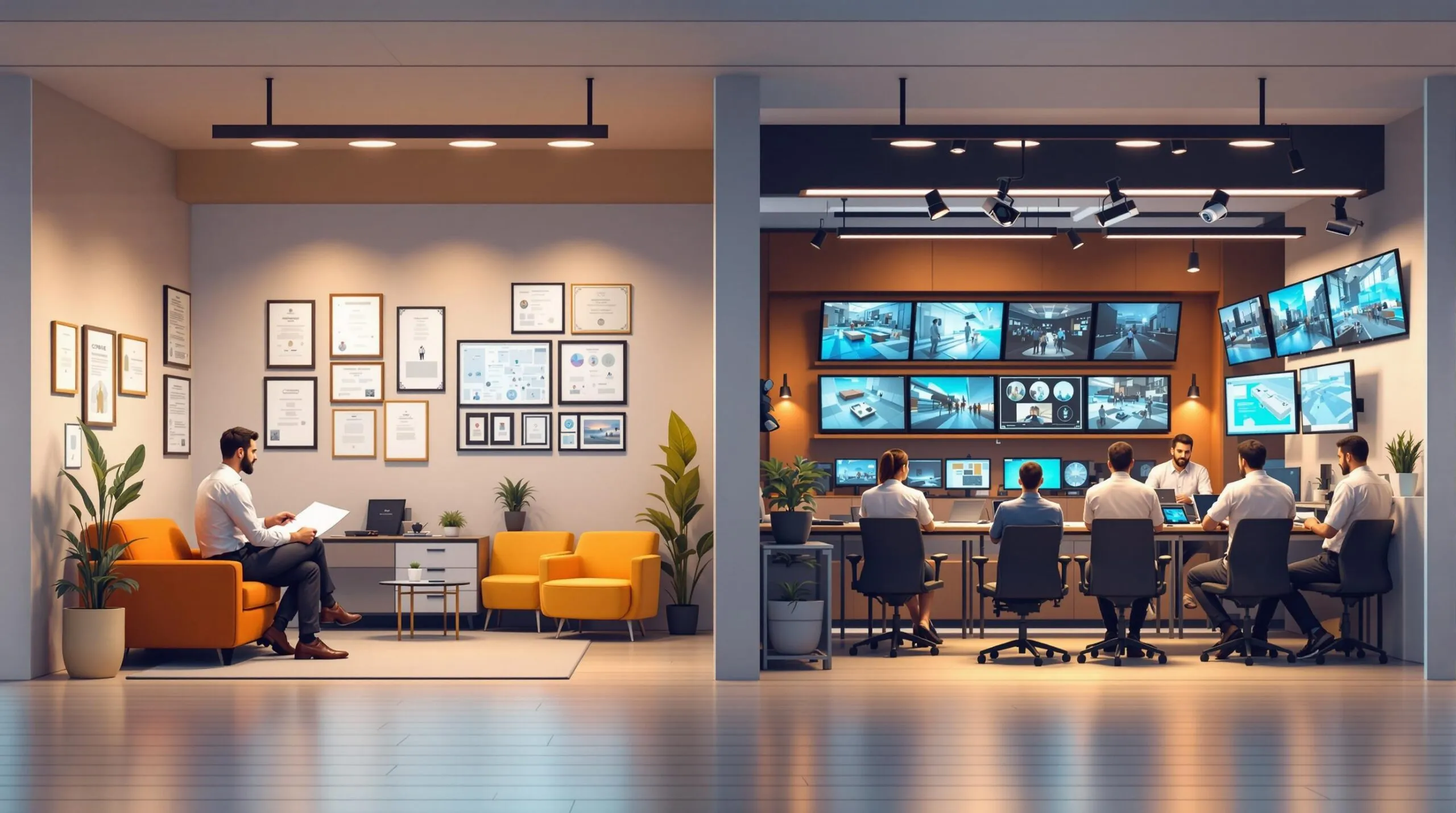
Private security protects people: individuals, families and their homes, with protection that is personal, discreet and built around how they live. Commercial security protects organisations: offices, sites, shops and events, with guarding and procedures built around the premises and the people who use them. The simplest test is what you are protecting. If it is a person and their family, you need private security; if it is a business or a place, you need commercial security.
For individuals and families at risk, private security usually starts with close protection for the people who need it and security at home. This guide sets out how the two differ, what the law requires of both, and how to choose.
The Key Differences
| Private security | Commercial security | |
|---|---|---|
| What it protects | A person, a family, their homes and journeys | A business, its premises, staff, stock and visitors |
| Typical services | Close protection, residential security, security drivers, staff vetting | Manned guarding, reception and access control, event security, patrols |
| How it is delivered | Personal, discreet, adapted to the family’s routine | Procedures, shifts and a visible presence |
| Who it answers to | The principal, the family or their family office | The business, its facilities manager or the event organiser |
| Risk assessment | The person: their profile, routines, travel and home | The site: layout, access, opening hours and incidents |
| Discretion | Central: the family’s privacy and schedule stay private | Important, but a visible deterrent is often the point |
| What drives the cost | Hours, number of officers, travel and the level of risk | Hours, number of guards and sites, and the equipment needed |
Neither is “better”. They answer different questions, and many clients need some of both.
What Is Private Security?
Private security is protection arranged around a person and their family. It covers:
- Close protection: officers who plan ahead and stay close to the principal, at home, at work, at events and abroad.
- Residential security: officers at the home who control who comes in, watch the alarms and cameras, and look after the house when the family is away.
- Security drivers: trained drivers who plan routes, watch for anyone following and keep the car secure.
- Staff vetting: background checks on nannies, housekeepers, drivers and others who work in the home.
- Safe rooms, risk assessments and coordination with a family office.
Its defining feature is that it fits around the family’s life, rather than the family fitting around it. It is often quietest when it is working best. Our page on private security for high-profile clients describes who it is for.
What Is Commercial Security?
Commercial security protects an organisation and everyone on its premises. It covers:
- Manned guarding: security officers at reception, gates and loading bays, and on patrol.
- Access control: passes, visitor management and keeping people out of areas they do not need.
- Event security: stewarding, searches, crowd management and response at concerts, conferences and private events.
- Corporate security: protecting staff, information and assets, including vetting new staff and investigating losses.
- Technology: alarms, cameras and access systems, monitored from a control room.
Commercial security works to set procedures and shifts, because the site, not a person, sets the routine. A visible presence is often deliberate: it deters crime and reassures staff and visitors.
What UK Law Requires of Both
Both are regulated by the Private Security Industry Act 2001 and licensed by the Security Industry Authority (SIA):
- Contract security staff need an SIA licence for the activity they carry out; staff employed directly by the business or family they protect do not usually need one.
- A close protection licence is needed to guard people against assault or injury. Guarding premises and events falls under other licences.
- A licence lasts three years, and since 1 April 2026 close protection officers must complete refresher training to renew.
- Working in a licensable role without a licence is an offence under section 3 of the Act.
- You can check any officer’s licence on the SIA’s public register.
Both must also follow data protection law (the Data Protection Act 2018 and the UK GDPR) for cameras, visitor logs and personal information, and health and safety law for the people they employ.
When Do You Need Private Security?
- You, your partner or your children have a public profile, significant wealth or a known threat.
- You have been followed, approached or targeted, or a dispute has made you a focus of attention.
- You travel often, or to places where the risk is higher.
- Your home holds valuables, has staff, or is often empty.
A risk assessment of you and your family decides what is proportionate: it may be a security driver and better procedures at home, or a full team.
When Do You Need Commercial Security?
- Your premises hold stock, cash, equipment or information worth stealing.
- You have a public reception, many visitors or a large workforce.
- You are running an event, from a conference to a concert.
- You need to meet the requirements of insurers, landlords or clients.
When You Need Both
The line often blurs. A business owner may need guarding at the office and close protection for the family. A family office may manage commercial security for the family’s company and residential security for the family’s home. A private event at home needs event procedures and private discretion at the same time. In these cases the two should be planned together, with shared information and one person responsible, so there are no gaps between them.
How to Choose a Provider
- Start with the risk, not the service list. Know what you are protecting and from whom.
- Check licensing: every officer’s SIA licence, of the right type.
- Ask about experience in your kind of work: a family home and a distribution warehouse need different skills.
- Ask about discretion and confidentiality, especially for private work.
- Meet the people who will do the work, or their team leader.
- Ask for a clear proposal: what is covered, the hours, who is responsible and how it is reviewed. Each arrangement is quoted individually, because the risk and the hours differ every time.
FAQs
What is the difference between private and commercial security?
Private security protects people: individuals, families and their homes and journeys, with discreet protection built around their lives. Commercial security protects organisations: offices, sites, shops and events, with guarding and procedures built around the premises. The deciding question is what you are protecting. A person and their family need private security; a business or a place needs commercial security.
Is close protection private or commercial security?
Close protection is private security. It protects a named person, wherever they go, and is built around their routine, profile and risks. Businesses do arrange close protection for executives, but the service itself is personal: officers plan around one person’s day and stay close to them. Contract close protection officers in the UK need an SIA close protection licence.
Do private security officers need a licence in the UK?
Contract security staff, private or commercial, need an SIA licence for the activity they carry out: close protection for guarding people against assault or injury, and other licences for guarding premises and events. Staff employed directly by the person or business they protect do not usually need one. Licences last three years and can be checked on the SIA’s public register.
Can one company provide both private and commercial security?
Yes, and for clients who need both it helps, because the two can be planned as one. A business owner might need guarding at the office and protection for the family, or a private event at home might need event procedures with private discretion. What matters is that the people doing each job have the right licence and experience for it.
What to Do Next
If the people are what you need to protect, talk to us about close protection for you and your family. If you are not sure which you need, our guide to close protection teams explains how personal protection works.