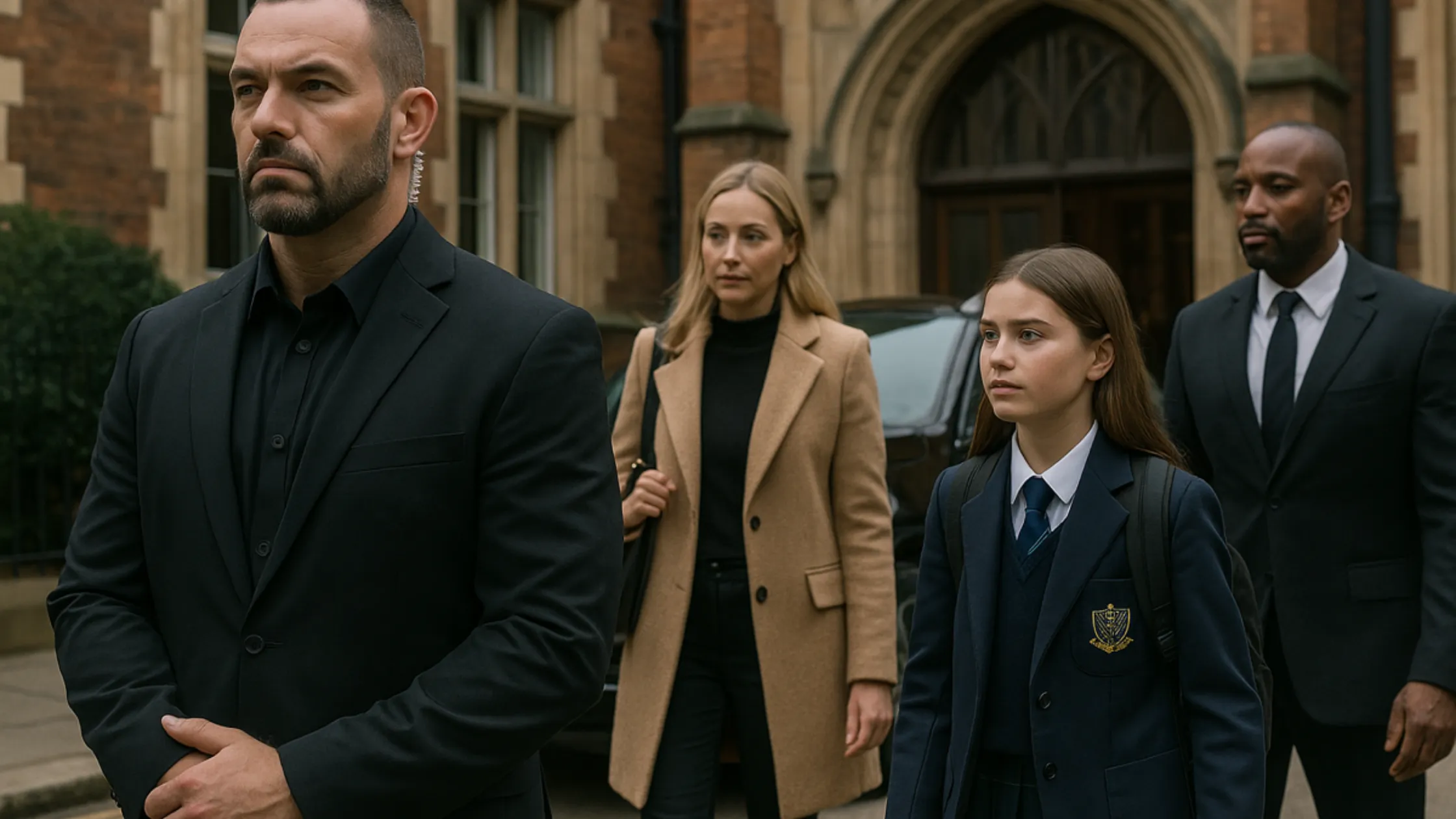
Family security is the protection of everyone in a family, not only its best-known member: partners, children and older relatives, at home, on the move and online. For children, it means planning around the places where they are most predictable, above all the school run, so they can lead a normal life with the right level of care around them. For some families that is good habits and a well-briefed school; for others it includes a security driver or close protection for children and the family.
This guide is for parents, family offices and the staff who support them. It covers how to judge each child’s risk, how to make the school run less predictable, what to agree with the school, online safety and when professional protection is worth it.
The essentials:
- Assess each child separately. Age, school, profile and online life all change the risk.
- Make the school run less predictable. It is the most fixed routine most families have.
- Agree a plan with the school. Who may collect, how they are identified, and what happens in an emergency.
- Mind the online footprint. School uniforms, sports fixtures and tagged posts give a lot away.
- Keep it proportionate. Children should feel safe, not watched.
What Is Family Security?
Family security looks at a family as a group of individuals, each with their own routine and level of exposure. A parent with a public profile may be well protected on the way to work while their children walk the same route to school at the same time every day. Family security closes that gap.
It usually starts with a risk assessment for the whole family, which looks at who might take an interest in the family and why, and where each person’s routine leaves them exposed. The measures that follow are matched to that risk. Many cost nothing.
Assessing Each Child’s Risk
Children’s exposure changes with age:
- Young children are almost always with an adult, so the risk sits with the adults around them: nannies, drivers and the people who collect them.
- Older children start travelling alone, meeting friends and using social media. Their independence matters, so the plan has to work with them, not against them.
- Teenagers need to understand the reasons for the rules, in terms that make sense to them, or they will find ways around them.
The assessment also considers the family’s profile, any past incidents or threats, custody arrangements, and who else knows the children’s routines.
Making the School Run Less Predictable
The school run happens at the same times, at the same places, every school day. That makes it the most predictable thing most families do. Simple changes help:
- Vary routes and drop-off points where the school allows it.
- Vary timings by a few minutes where you can.
- Know the danger points: the last few hundred metres, the school gate and any place where the car has to stop.
- Use ordinary vehicles. A conspicuous car marks out the child and the family.
- Choose drivers carefully. Anyone who drives the children should be checked before they start, and briefed on what to do if something feels wrong.
For families at higher risk, trained security chauffeurs plan routes for risk rather than speed, spot vehicles that follow and know how to drive away from trouble.
Working with the School
Most schools are used to families with security concerns. Agree with the school:
- Who may collect each child, how they are identified, and what happens if someone else turns up.
- How to reach you quickly, and how the school will contact you in an emergency.
- Trips and events: how you will hear about them in advance, and whether your plans need to change.
- Discretion: the school should not share your child’s details, timetable or photographs beyond what is needed.
If a protection officer accompanies a child, agree how they will work around the school day so the child’s experience stays as normal as possible.
Online Safety
Much of what someone needs to find a child is online: a school crest on a uniform, a team photograph with names, a tagged location or a parent’s public post. Help children to:
- keep accounts private, turn off location sharing, and switch off the location setting in the phone’s camera so photographs do not record where they were taken;
- avoid posting their school, home or plans in real time;
- tell you about messages or contact that make them uncomfortable.
Parents and staff should follow the same rules. Household staff in particular should not post anything that shows the children, the house or the family’s movements.
When Is a Protection Officer Needed?
A close protection officer for a child is the exception, not the rule. It becomes worth considering when there is a specific threat, a high public profile, a recent incident, or travel to places where the risk is higher. Officers who work with children are chosen for their temperament as much as their training: calm, patient, discreet and able to stay at the right distance so the child can be a child.
Where a family office coordinates the family’s security, it is usually the right place to hold the plan, brief the staff and keep everyone’s arrangements consistent.
Keeping It Proportionate
Children notice everything. Too much visible security can make them anxious, mark them out among their friends and make them less, not more, safe. The best family security is the kind children barely notice: sensible routines, trusted adults and a plan the family has talked through calmly.
FAQs
What is family security?
Family security is the protection of every member of a family, not just its best-known member. It covers partners, children and older relatives at home, on the move and online. It starts with an assessment of each person’s routine and exposure, and the measures that follow, from changes in habit to a security driver or protection officer, are matched to that risk.
How can I make my child’s school run safer?
Vary routes, timings and drop-off points where the school allows, use an ordinary vehicle, and make sure anyone who drives your child has been properly checked. Agree with the school who may collect your child and how they are identified. Pay attention to the last part of the journey and the school gate, where the routine is most fixed.
Does my child need a bodyguard at school?
Most children do not. Good habits, a well-briefed school and careful choice of drivers and staff are enough for most families. A close protection officer is worth considering when there is a specific threat, a high public profile or a recent incident. When one is needed, they should be chosen for their manner with children as well as their training.
What should I tell the school about our security?
Tell the school who may collect your child, how they will be identified and how to reach you quickly. Ask for notice of trips and events, and agree that your child’s details, timetable and photographs will not be shared beyond what is needed. If a protection officer is involved, agree how they will work around the school day.
What to Do Next
If you would like help planning your children’s security, find out how our close protection officers work with families.