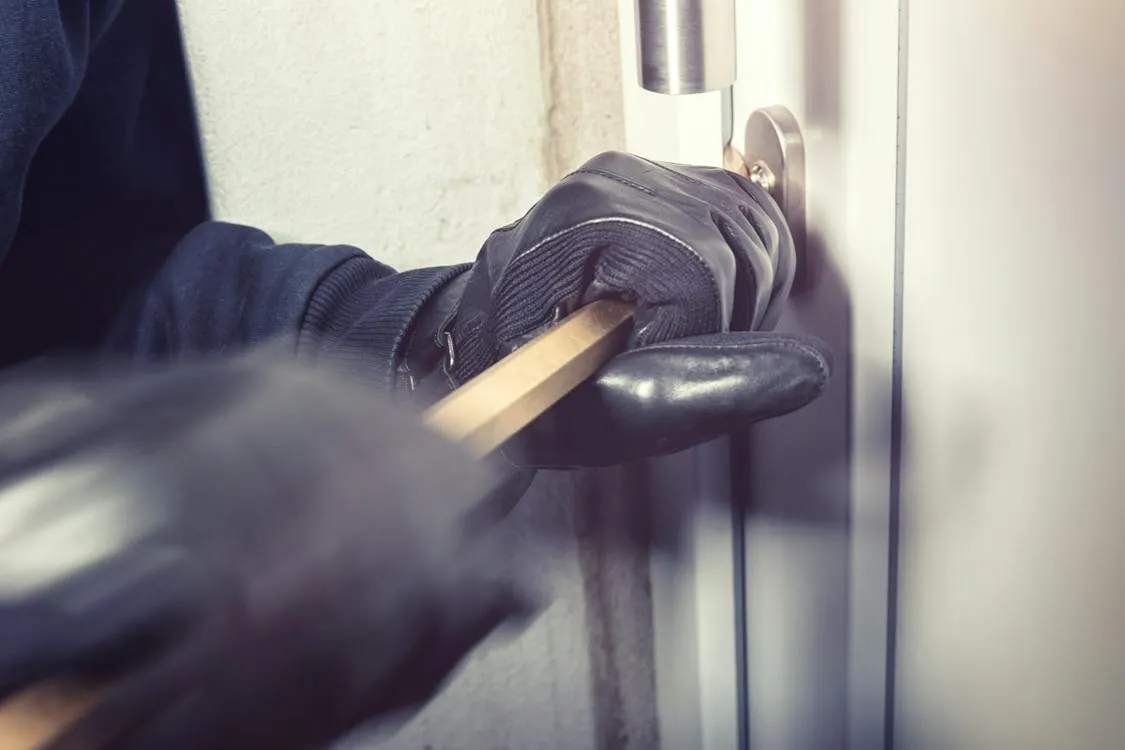
Securing your home against invasion comes down to four things: understanding why a house might be targeted, making it hard to get into, detecting an intruder early, and giving the family a plan they have practised. A home invasion is a break-in while people are at home, so it threatens the family as well as their property. This guide is for households who want to reduce that risk, particularly those with a high net worth or a public role, and it works alongside residential security where the risk calls for it.
The sections below follow the order to tackle it in: the risk, the doors and windows, wider security measures, technology, security staff, and finally the family safety plan.
Why Are Some Homes Targeted?
Understanding the threat comes first. Burglary of homes is far less common than it was, but it has not gone away: the Crime Survey for England and Wales estimated 373,000 domestic burglaries in the year ending June 2026, 84% fewer than in 1995 (ONS, Crime in England and Wales: Appendix tables). Wealthy families face the risk of a home invasion for theft, and in rare cases for kidnap for ransom. People with control over money or premises, such as senior bankers or business owners, also face tiger kidnapping, where a family member is held to force them to hand over money or access.
Some circumstances make a home a more likely target:
- Location: homes in remote places or wealthy neighbourhoods may look more rewarding to criminals and less likely to be seen.
- Cover: high walls, tall hedges and extensive planting that block the view from the street or neighbours can hide someone breaking in.
- No visible security: a house with no alarm, cameras or guards looks like an easier target.
- Predictable routines: criminals may study a family’s habits to choose a time when the house is empty, or when someone is alone. Even small changes can give a family’s movements away, as our story of what window boxes can say about you shows.
A security risk assessment shows you how your home looks to someone watching it. Once you understand these risks, you can take the right precautions and close the weak points.
How Do You Strengthen Doors and Windows?
Doors and windows are the most common way in. Reinforcing them makes a break-in slower and noisier, and the harder your home is to enter, the more likely an intruder is to look for a softer target.
Doors
- Choose solid-core doors made of materials that resist being broken, such as oak, steel or reinforced composite.
- Fit high-quality deadlocks with a long throw bolt to resist kicking and prying.
- Reinforce frames and locks with strike plates and door jamb guards.
- Consider a door security bar, or a keyless smart lock, as an extra layer.
- Not every break-in is forced: in about one in ten burglaries of homes in England and Wales in the year ending March 2025, the burglar got in by pushing past the person who opened the door, and in 6% by false pretences (ONS, Nature of crime: burglary). Fit a door viewer or video doorbell, so you never have to open the door to see who is there.
Windows
- Replace single-glazed windows with laminated or double-glazed units, which are far harder to break.
- Fit window locks and reinforce frames.
- Fit restrictors that limit opening to around 100mm, so nobody can climb in through a window left open for air.
- Apply security film, which holds glass together when it is struck and slows an intruder down.
- Consider bars or grilles on ground-floor windows, choosing designs that open from inside so they do not trap anyone in a fire.
What Security Measures Deter an Intruder?
Beyond doors and windows, these measures deter criminals and protect the house:
- Perimeter security: fences, gates and motion-activated lighting create a secure boundary.
- Alarm systems: a monitored alarm alerts the police or a private security company to a break-in.
- Cameras: cameras at entrances and blind spots monitor and record activity.
- Access control: electronic cards or biometric readers restrict and record entry.
- Valuables: keep valuable items in a hidden, secure place or a safe that resists theft and fire.
- Landscaping: trim shrubs and trees to remove hiding places and keep clear sightlines.
How Can Technology Help?
Technology adds layers of protection and lets you see what is happening when you are not there:
- Smart home security systems bring alarms, cameras and access control together in one app.
- Video doorbells let you see and speak to visitors without opening the door.
- Motion sensors detect movement and switch on alarms or lighting.
- Remote monitoring by a security company watches the property around the clock, even when you are away.
- Home automation controls lighting, locks and appliances remotely, so the house looks occupied.
Keep every connected device updated and protected by a strong password, since a system that can be hacked can also be switched off.
When Should You Hire Security Staff?
For families who need a higher level of protection, a residential or close protection team adds trained people to the plan. When choosing one:
- Assess your needs: consider the size of the property, the threats you face, and the family’s lifestyle and routines.
- Choose a reputable firm: look for a track record in residential and close protection work, and check references and insurance.
- Check the officers: make sure they have been thoroughly vetted, hold the licences their role requires and have relevant experience.
- Agree the plan: work with the firm on access control, patrols and emergency procedures for your home.
- Review it regularly: check the team’s performance and update the plan as your life or the threats change.
How Do You Create a Family Safety Plan?
A family safety plan protects your loved ones if someone does get in. Every member of the household should know it:
- Communication: agree how the family contacts each other in an emergency, and keep a list of emergency contacts, including neighbours and your security provider.
- A safe room: choose a room the family can retreat to and lock from the inside (more on this below).
- Escape routes: plan and practise more than one way out of the house, and make sure every member of the family can use them on their own.
- What to do: teach the family to stay calm, avoid confronting an intruder, get to safety and call 999, and follow the instructions of the police or security staff.
- Practice: run the plan as a drill from time to time, so that nobody has to think about it in an emergency.
A Safe Room for the Family
The simplest safe room is an existing room with a solid-core door, a strong deadlock, a phone that works without the house’s power, and basic supplies. It should be easy to reach from the bedrooms. For families at greater risk, a purpose-built panic room adds reinforced walls, a rated door, its own air supply and backup power. Our guide to panic room features and safety standards explains what goes into one, and our guide to panic room door ratings covers the door itself.
Why Plan for Something You Hope Never Happens?
This may seem excessive at first, but we plan for things we hope will never happen all the time:
- On an aircraft, before take-off, we are told what happens if:
- the cabin loses air pressure
- we land on water
- we need to find the emergency exits
- On a ship:
- we are shown the alarm
- we are told what to do if we need to abandon ship
- Every year we do fire drills at work and at school.
The same applies at home. Someone was at home in 63% of burglaries of homes in England and Wales in the year ending March 2025, and in nearly half of the cases where the householder saw the burglar, force or violence was threatened or used (ONS, Nature of crime: burglary).
It is common sense to hope for the best but plan for the worst.
Final Thoughts
Protecting your home and family from invasion starts with understanding the risk, then fitting the right doors and windows, adding security measures and technology, bringing in security staff where needed, and giving the family a plan they have practised. For the wider set of measures that protect a high-value home, see the seven essentials of home security for high-net-worth families.
Review your security regularly, keep up with local crime trends, and keep the whole family security-minded.
FAQs
What is the most important step in securing a home against invasion?
There is no single step, but most security plans start with doors and windows, because that is how most intruders get in. Solid doors in reinforced frames, good deadlocks and laminated glass slow an intruder down and make noise. Combined with an alarm that alerts someone straight away, that delay gives the family time to reach safety and call for help.
What should my family do if someone breaks in while we are home?
Do not confront the intruder. Get everyone to a safe room or out of the house by a planned route, lock the door, and call 999 from a phone you keep in that room. Stay where you are until the police or your security team tell you it is safe. A plan practised in advance makes this far easier to do under stress.
How can I tell if someone is watching my home?
Look for unfamiliar vehicles parked nearby for long periods, people photographing the house, unexpected callers asking questions, or cold calls about your routine. Staff and neighbours often notice first, so ask them to report anything unusual. Keep a note of dates, times and descriptions, and report persistent concerns to the police on 101, or 999 if there is immediate danger.
What to Do Next
For advice on securing your own home, talk to us about residential security for your family.