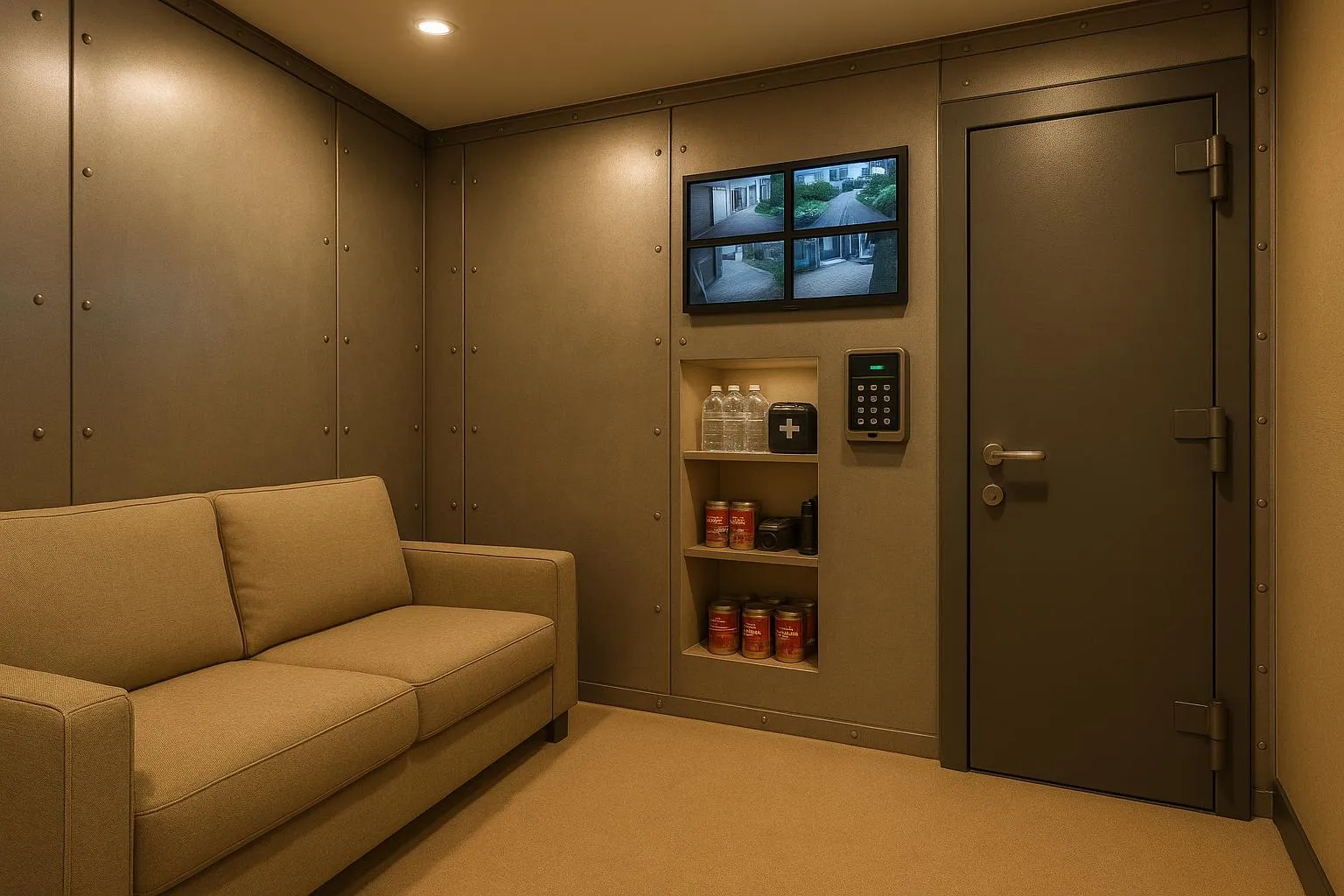
A panic room door is a doorset, meaning the door, frame, hinges and locks together, that has been tested to resist a set level of attack for a set time, and that the people inside can lock and open quickly. The rating on its certificate tells you what it was tested against: forced entry with tools, firearms, or both. A door is only as strong as the frame and wall around it, so the whole opening has to be designed as one system.
This guide explains the ratings you will meet, in general terms, and what to ask when choosing a door for a safe room. For the room as a whole, including air, power and communications, see our guide to panic room installation and the standards that apply. If you are planning a room, our panic room installation team can advise on the right specification.
The short version:
- Forced entry: look for a door certified to LPS 1175 or EN 1627. PAS 24 is a good baseline for a home’s outer doors but is not designed for a sustained attack.
- Firearms: if they are part of the threat, the door also needs a bullet-resistance class under EN 1522.
- One system: door, frame, hinges, locks and the wall they are fixed to must all match the rating.
- From inside: the room must lock fast and open easily from inside, without a key.
What Makes a Door Fit for a Safe Room?
An ordinary front door is designed to keep out an opportunist. A safe room door has a different job: to keep determined attackers out for long enough for help to arrive, while the family waits inside. That means:
- A tested rating, so its strength is proven rather than claimed.
- A strong frame, fixed into a wall that can carry the load.
- Hinges and locks that cannot be attacked from outside.
- Quick locking and easy release from inside, so no one is trapped.
- A door that fits the house, so it can be disguised or finished to match.
How long the door needs to hold depends on how long help takes to arrive. A risk assessment of the family and the house is the right place to set that.
Forced-Entry Ratings Explained
Forced-entry standards test a doorset against a set of tools for a set time. The higher the rating, the heavier the tools and the longer the attack it must withstand.
PAS 24
PAS 24 is the British specification for the enhanced security of doors and windows. It tests against the kind of attack an opportunist burglar might try with simple hand tools. It is widely used for new homes, and Approved Document Q of the building regulations in England refers to it for doors and windows in new dwellings. It is a sensible baseline for a home’s outer doors, but it is not designed for the sustained, deliberate attack a safe room may face.
LPS 1175
LPS 1175 is the Loss Prevention Certification Board’s standard for intruder-resistant building products, including doors, shutters and walls. Products are tested by trained attackers using defined sets of tools, and given a rating that reflects the tools and the time they resisted. Ratings range from resistance to a quick attack with small hand tools up to long attacks with heavy and powered tools. Certified products are listed by the certification body, so you can check a claim.
EN 1627
EN 1627 is the European standard for the burglar resistance of doors, windows and shutters. It sets six resistance classes, RC1 to RC6. The lower classes are tested against simple tools and short attacks; the upper classes against heavier and powered tools for longer. Testing covers static loads, dynamic impact and manual attack.
Bullet Resistance: EN 1522
Where firearms are part of the threat, the door also needs a bullet-resistance rating. EN 1522 classifies doors, windows, shutters and blinds by the weapon and ammunition they will stop, from handguns at the lower classes up to rifles at the higher ones. Classes may also show whether the inside face splinters when hit, which matters for the people behind it. Any glazing in or beside the door is tested separately under EN 1063.
A door can carry both a forced-entry and a bullet-resistance rating. Ask for both certificates if both threats apply.
Frame, Hinges and Walls: One System
A rated door hung in an ordinary frame, fixed to a stud wall, gives a false sense of safety. Attackers go for the weakest point, so:
- The frame must be the one tested with the door and fixed as the test specified.
- The hinges should be protected or concealed, with hinge bolts so the door holds even if the hinges are attacked.
- The locks should engage at several points around the door, not only at the latch side.
- The wall around the door must resist the same attack. Steel, reinforced concrete or rated panels may be needed, and they should be rated too, ideally to the same standard.
- Gaps and services, such as vents and cable routes, must not create a way in.
The certificate should describe the doorset as tested. If anything changes, such as a different frame, lock or glazing, ask whether the rating still applies.
Locking and Release from Inside
A safe room is only useful if the family can get in and lock the door in seconds, and get out easily when it is safe. Look for:
- Fast locking from inside, with one action, by anyone in the family.
- No key needed to open from inside, so no one is ever trapped.
- A way to see out, such as a camera feed, before opening the door.
- A plan for power failure, if the locks are electronic.
- Control over outside access, so only the family and agreed people can open it from outside.
Practise using the door. Everyone who might need the room should know how to lock it, and should have tried it.
Retrofit or New Build?
In a new build or major renovation, the room can be designed in from the start: walls can be built to carry a heavy door, and the frame fixed into the structure. This usually gives the strongest result for the least disruption.
In an existing home, a safe room is usually made from an existing room, such as a dressing room, a study or a room in the basement. The door may need a new or strengthened wall around it, and the floor must carry its weight. Doors can be finished to match the house, and in a listed building the work may need listed building consent, so involve the conservation officer early.
Either way, the door is one part of a wider plan. A safe room works best alongside good residential security for the whole home, so that an intruder is noticed, and help is on its way, before the family needs the room.
FAQs
What rating should a panic room door have?
It depends on the threat and how long help will take to arrive. For forced entry, look for a door certified to LPS 1175 or EN 1627, where a higher rating resists a longer attack with heavier tools. If firearms are a concern, it also needs a bullet-resistance class under EN 1522. A risk assessment of the house and family should set the level.
Is a PAS 24 door strong enough for a safe room?
PAS 24 is a good standard for a home’s outer doors, and it is referred to in the building regulations for new homes in England. It tests against an opportunist with simple hand tools, not a sustained, deliberate attack. For a safe room, where attackers may be determined and well equipped, look for a door rated to LPS 1175 or EN 1627.
Can a panic room door be disguised?
Yes. Many safe room doors are finished to match the doors around them, with timber, paint or panelling over the steel, and some are hidden behind joinery. Disguise helps because attackers cannot target a room they cannot find. The finish must not affect the tested doorset, so ask the manufacturer what can be added without changing the rating.
Does the wall matter as much as the door?
Yes. Attackers go for the weakest point, so a rated door in an ordinary wall can be bypassed by breaking through beside it. The wall, frame and fixings should resist the same attack as the door, and any vents or cable routes should be protected. Treat the door, frame and wall as one system with one rating.
What to Do Next
If you are planning a safe room, talk to us about fitting a safe room in your home.