
Travelling abroad can be exciting, but safety should always come first. Here are ten key measures to protect yourself while travelling internationally:
- RFID-Blocking Wallets: Protect your contactless cards and passports from electronic theft.
- Slash-Resistant Travel Bags: Prevent theft with bags made from cut-resistant materials.
- Contactless Payment Limits: Set spending caps on your cards to minimise financial risks.
- SecTech UK Travel Security Services: Tailored security solutions for high-risk travellers.
- Encrypted Cloud Backup Solutions: Safeguard digital copies of important documents.
- Garmin inReach Satellite Communicator: Stay connected in remote areas with satellite communication.
- Sterling-Based Prepaid Travel Cards: Manage spending and reduce risks of carrying cash.
- Trauma Kits: Handle critical injuries with kits designed for emergencies.
- Window Films for Accommodation Security: Strengthen glass surfaces to deter break-ins.
- Ordnance Survey Mapping: Use detailed maps for evacuation routes and navigation.
Quick Comparison Table
| Security Measure | Cost Range (£) | Best For |
|---|---|---|
| RFID-Blocking Wallets | £7.95 – £29.99 | Card and passport protection |
| Slash-Resistant Travel Bags | £49.90 – £124.90 | Urban travellers |
| Contactless Payment Limits | Free | Financial security |
| SecTech UK Travel Security Services | Custom pricing | High-risk individuals |
| Encrypted Cloud Backup Solutions | Varies by provider | Digital document safety |
| Garmin inReach Satellite Communicator | £245.98 + plans | Remote adventurers |
| Sterling-Based Prepaid Travel Cards | Varies by provider | Managing spending abroad |
| Trauma Kits | £84.99 – £230.00 | Emergency medical situations |
| Window Films for Accommodation | £25 – £50/m² | Long-term stays |
| Ordnance Survey Mapping | £34.99/year | Navigation and evacuation routes |
Start with simple steps like RFID wallets and contactless limits, then add advanced tools like cloud backups or trauma kits depending on your needs. Planning ahead ensures a safer, more enjoyable trip.
Top International Travel Safety Tips | Security Expert Advice on Staying Safe Abroad
Pre-Departure Security Planning
Getting your security plans in order well before you leave is essential for a safe trip abroad. Ideally, this process should start weeks in advance, not after you’ve arrived. A great starting point is the Foreign, Commonwealth & Development Office (FCDO), which offers detailed travel advisories to help you understand potential risks in your destination country. Their guidance is designed to help travellers make informed decisions and prepare for a smoother journey.
"Our travel advice aims to provide objective information and advice. Its purpose is to help you make better-informed decisions about international travel and plan for a trouble-free trip." – Foreign, Commonwealth & Development Office
The FCDO updates its travel advice regularly, sourcing intelligence from British embassies, local authorities, and security services. These advisories cover a broad range of topics, including safety risks, health concerns, entry requirements, local laws, and terrorism threats. Many destinations still pose challenges due to security risks, health issues, or legal systems that differ significantly from those in the UK.
Before heading out, keep a close eye on current events and security updates for your destination. Local news outlets can be invaluable for tracking developments such as political unrest, terrorist activity, or civil disturbances. For example, in 2022, aid workers faced 444 attacks globally, resulting in 116 fatalities, 143 injuries, and 185 kidnappings. Staying informed about these risks can make a big difference in your trip planning. It’s also wise to evaluate the reliability of local healthcare services in case of emergencies.
Understanding the healthcare infrastructure of your destination is just as important as monitoring security risks. Research the availability and quality of medical facilities, emergency services, and overall healthcare standards. Look for hospitals accredited by organisations like the Joint Commission International (JCI). Knowing what to expect from local medical services can save you from unpleasant surprises.
When it comes to terrorism, focus on areas that could be potential targets, such as tourist attractions and public spaces. Studying recent incidents and threat analyses can provide valuable insight into the risks and help you prepare accordingly.
Don’t overlook the impact of legal and cultural differences. Acts that are perfectly acceptable in the UK might have severe consequences abroad. Spend some time researching local customs, laws, and regulations to avoid any misunderstandings or legal troubles during your trip.
To stay ahead of potential risks, sign up for email alerts on the FCDO website. These updates will notify you immediately if there are changes to the security situation in your destination. Also, double-check that your travel insurance covers essentials like medical treatment, emergency evacuation, and disruptions caused by unforeseen events. Visiting a travel health clinic at least six weeks before you leave is another smart move. This allows you to get tailored health advice and any necessary vaccinations.
Finally, develop a solid contingency plan for emergencies such as natural disasters or civil unrest. Identify multiple evacuation routes and make a note of the nearest British embassies or consulates, along with their emergency contact details.
1. SecTech UK‘s Travel Security Services
SecTech UK takes travel security to the next level, addressing not just pre-departure concerns but also the challenges that arise while you’re on the move. They provide customised protection for UK travellers, catering to individuals with unique needs and destinations. Their clientele includes Heads of State, celebrities, and high-net-worth individuals, with services extending from London’s Mayfair and Knightsbridge to Manchester, Birmingham, and even international locations.
Their approach focuses on preventing risks before they happen, rather than merely reacting to threats. Before you leave the UK, their security teams conduct detailed assessments of your destination, planned activities, and any potential vulnerabilities. This includes inspecting accommodation, analysing the local area, and evaluating key interactions during your trip, all of which feed into a thorough pre-departure security plan.
Effectiveness in Mitigating Risks
SecTech UK’s security reviews are designed to pinpoint weak spots and provide actionable strategies to keep you safe abroad. By taking an objective, external view, they often identify risks that others might miss. They recommend periodic reviews to adapt to any changes in your travel plans or the security landscape of your destination.
Their close protection officers are expertly trained to handle hostile situations and can seamlessly coordinate with on-site security teams at hotels, venues, or businesses. For high-risk destinations, they can deploy VIP security teams on short notice, ensuring your safety without disrupting your itinerary.
Tailored for UK Travellers
SecTech UK’s services are carefully aligned with UK regulations and expectations, offering solutions that fit the needs of British travellers. For example, their security chauffeur services include armoured vehicles when necessary, while their driver training programmes adhere to British safety standards. Their expertise in cross-border operations ensures compliance with both UK and international regulations, making them an ideal choice for business travellers navigating multiple countries.
With multinational teams managed from global control rooms, SecTech UK ensures seamless coordination across borders. This consistency is invaluable for UK travellers who require dependable security no matter where their journey takes them.
Transparent Pricing
SecTech UK avoids one-size-fits-all pricing, instead offering customised security packages that eliminate unnecessary extras. Their pricing model is straightforward, focusing on what you actually need – whether that’s a transport security assessment, route planning, or a full close protection service.
They also provide free security assessments to evaluate your specific needs and will review quotes from other providers to ensure their pricing remains competitive. This transparency helps UK travellers make well-informed decisions without worrying about hidden costs or unexpected charges.
Seamless Integration with Travel Plans
SecTech UK’s services are designed to fit effortlessly into your travel plans. They can arrange secure transportation in advance through trusted providers, sparing you the hassle of finding reliable options upon arrival. Thanks to their global network, they maintain consistent standards whether you’re visiting one destination or travelling across multiple countries.
Their check-in protocols ensure regular updates are shared with your UK-based contacts, offering reassurance to family members or employers. These updates are scheduled at key points – such as arrival, location changes, or pre-set intervals – ensuring continuous monitoring of your safety without interfering with your travel experience.
2. RFID-Blocking Wallets
RFID-blocking wallets are designed to protect your contactless cards and passports by using materials like carbon fibre, aluminium, or metal mesh. These materials block radio waves in the 125 kHz to 13.56 MHz range, which is the frequency used by UK contactless payment cards and biometric passports.
Since the mid-2000s, UK passports have included RFID chips that store personal data and photographs, making them potential targets for electronic pickpocketing. Similarly, contactless payment cards can transmit data to nearby scanners without you being aware, especially in crowded areas like Oxford Street in London or busy train stations across Europe.
Effectiveness in Mitigating Risks
While the idea of RFID skimming sounds concerning, the actual risk is minimal. Experts estimate that cases of RFID theft account for less than 0.1% of all digital theft incidents. James E. Lee, Chief Operating Officer of the Identity Theft Resource Center, has noted:
"We do not believe this topic addresses a real risk. Chip-enabled payment cards and digital wallets are the most secure forms of payment except for cash."
Visa and other industry leaders confirm that contactless transactions use one-time codes, which makes it nearly impossible for stolen data to be misused. However, for UK travellers heading to higher-risk destinations or carrying several contactless cards, RFID wallets can offer an extra layer of reassurance and security.
High-quality RFID wallets function by creating a Faraday cage effect around your cards. This is achieved with a thin metal mesh lining that blocks electromagnetic signals while maintaining the wallet’s standard look and usability.
Compatibility with UK-Specific Requirements
If you’re a UK traveller, it’s important to choose an RFID wallet that fits British passports and accommodates the UK’s £100 contactless payment limit. Many international wallet designs may not account for UK-specific document sizes, so it’s worth seeking wallets with dedicated compartments for passports alongside card slots.
Be aware that some RFID wallets might interfere with mobile payment systems like Apple Pay or Google Pay. It’s a good idea to test compatibility with your preferred payment methods before travelling. The best wallets will allow you to access individual cards easily while keeping others protected.
For added convenience, consider wallets with separate compartments for different currencies. This can help you organise your sterling cards alongside any local payment methods you may pick up while abroad.
Cost-effectiveness
RFID-blocking wallets are available at a wide range of prices. Budget options, like BRELIE RFID Blocking Sleeves, start at £4.99, while premium models such as Bellroy’s Jet Set cost up to £159.00. Mid-range choices, like Vaultskin’s MAYFAIR Zipper Wallet priced at £59.99, offer a balance between protection and affordability.
The amount you spend will depend on how often you travel and your level of concern about potential risks. For occasional holidaymakers, inexpensive RFID sleeves or blocking cards that fit into your current wallet can provide sufficient protection. On the other hand, frequent travellers or business professionals may find it worthwhile to invest in a more robust solution.
Frank McKenna, chief strategist at Point Predictive, advises caution, stating: "Don’t waste your money." However, the low cost of basic RFID protection makes it a reasonable precaution for travellers who want to stay proactive.
Ease of Implementation During Travel
RFID wallets are incredibly easy to use, as they work passively without requiring any extra effort on your part. Whether you’re in a crowded airport, a bustling market, or packed onto public transport, the protection is automatic.
For maximum effectiveness, choose wallets that fully enclose your cards. The blocking material needs to cover the cards entirely to prevent any electromagnetic signals from leaking through. You can test your wallet’s performance by trying to make a contactless payment while the card is inside – if the wallet is doing its job, the transaction won’t go through.
For those who prefer a simpler option, individual RFID sleeves can provide effective protection without the need to replace your existing wallet.
3. Encrypted Cloud Backup Solutions
Encrypted cloud backup solutions offer a secure way to safeguard copies of your essential travel documents and data while you’re abroad. Unlike traditional cloud storage, these services employ zero-knowledge encryption, meaning your files are encrypted on your device before being uploaded. This ensures that even the service provider cannot access your personal information.
Files are encrypted locally using AES-256 encryption before being uploaded – a method praised by Joe Mullin of the Electronic Frontier Foundation for its robust security:
"In the digital world, end-to-end encryption is going to be your best bet for getting a truly private and secure conversation that’s kind of on the level of what you could have in person."
Effectiveness in Mitigating Risks
Securing your digital documents is just as important as protecting your physical belongings when travelling abroad. Encrypted cloud backups safeguard your data against risks like theft, loss, or damage to your devices. For example, if your laptop is stolen in Barcelona or your phone gets damaged during a hike in the Alps, your critical documents remain safely accessible online from any device with an internet connection.
The security benefits are impressive. Acronis, a widely trusted provider protecting 5,000 PB of data, reported detection rates of 98.2% for real-world malware and 99.9% for on-demand scanning, with zero false positives.
For UK travellers, these solutions have become even more relevant due to recent changes in data protection. With UK users losing access to Apple’s Advanced Data Protection for iCloud – which previously offered end-to-end encryption for additional data categories – third-party services like NordLocker and Proton Drive now provide effective alternatives.
Compatibility with UK-Specific Requirements
Travellers from the UK must also consider data protection regulations when choosing a cloud backup service. Under UK GDPR, if you decide how your personal data is processed, you are classified as a data controller. This means you’re responsible for ensuring your chosen cloud provider handles your data securely and processes it only according to your instructions.
Several services meet these regulatory requirements while offering competitive pricing. For instance:
- Sync.com: Offers 2TB of storage for £4.80 per month (billed annually) with zero-knowledge encryption applied to all files.
- Tresorit: Provides 1TB of storage for £11.99 per month (billed annually) and operates servers in the UK and other locations.
- Internxt: Stores data exclusively on EU servers, offering 3TB for just £3 per month on yearly plans.
Data sovereignty is another critical consideration. GDPR Articles 45-47 require data to be stored within the EU or in countries with equivalent data protection laws. Always ensure your provider can demonstrate compliance with these regulations and offers written contracts outlining their security measures.
Cost-effectiveness
Encrypted cloud backup solutions are surprisingly affordable. Budget-friendly options like Internxt’s 3TB plan for £3 per month and premium services like Tresorit’s 1TB plan for £11.99 per month provide excellent value. Additionally, lifetime plans from providers like pCloud or Icedrive can save money in the long run.
When compared to the cost of replacing lost documents abroad or paying excess fees on travel insurance, these services are a cost-effective choice. A single incident of document loss in a foreign country could easily exceed the cost of several years’ worth of cloud backup subscriptions.
Ease of Implementation During Travel
These solutions are designed to be traveller-friendly. Most services offer automatic synchronisation across devices, ensuring your files are continuously backed up without requiring manual input. Before you set off, upload your critical documents and remove local copies from your devices to minimise exposure to risks.
While on the move, avoid using untrusted wireless networks. Instead, rely on a VPN or mobile data to access your backups securely. The process is as straightforward as using platforms like Dropbox but with the added benefit of enhanced security.
After returning home, it’s a good practice to update passwords for any accounts accessed during your trip. This precaution helps maintain security even if your travel devices were compromised.
One of the biggest advantages of encrypted backups is their accessibility. Whether you’re in an internet café in Tokyo or a remote Scottish village with mobile coverage, your documents remain available whenever you need them. This reliable access is an essential part of broader strategies for safe and secure international travel.
4. Garmin inReach Satellite Communicator
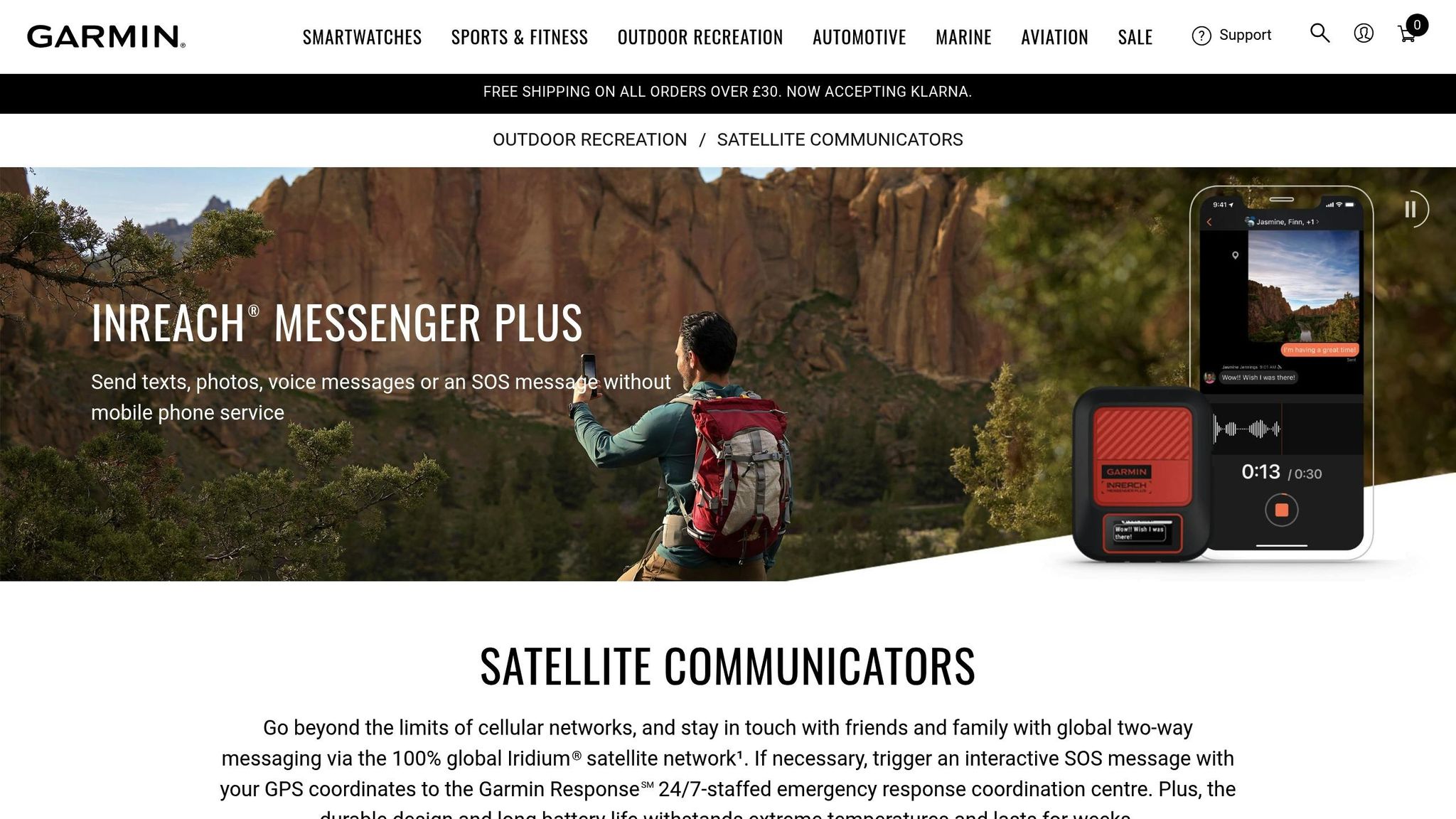
The Garmin inReach Satellite Communicator transforms your mobile phone into a reliable emergency tool for areas where mobile networks simply don’t work. Using the Iridium satellite network, it ensures global coverage, so you can stay connected and call for help no matter where you are on the planet. It’s a practical addition to your pre-trip planning, offering peace of mind when venturing into remote locations.
Unlike standard emergency beacons, the inReach allows two-way communication, enabling detailed conversations with rescue teams during emergencies. A tester shared their experience:
"This is Garmin Response. What’s your emergency?" I never expected to hear those words during my gear testing of the Garmin inReach Mini 2, but within 30 seconds of hitting the SOS button, I was connected to a dispatcher who immediately began coordinating rescue efforts."
Effectiveness in Mitigating Risks
The emergency response capabilities of the Garmin inReach are well-proven. Garmin Response has managed over 14,500 emergency cases across more than 150 countries. Its International Emergency Response Coordination Centre operates 24/7 and supports communication in 210 languages. When an SOS is triggered, users can provide specific details about their condition and needs, as the system stores emergency contacts, trip plans, and medical information for quick access.
Beyond emergencies, the device offers weather updates and lets you share your live location with loved ones back home. The TracBack feature is particularly useful, guiding you back to your starting point if you lose your way. Built to withstand tough conditions, the device is impact-resistant and rated IPX7 waterproof. A user review highlights its reliability:
"Always take mine with me no matter how remote I go, operates reliably even in challenging environments."
Compatibility with UK-Specific Requirements
For UK travellers, the Garmin inReach Mini 2 is available for purchase at £245.98, including VAT. While it’s legal in the UK and most destinations, some countries – like India, Cuba, North Korea, and Burma – impose restrictions on satellite devices. It’s crucial to check local laws before travelling. In one case, a traveller was detained at an Indian airport in January 2025 for carrying this device, underscoring the importance of verifying regulations beforehand.
Before travelling abroad, consult the embassy of your destination country to confirm if permits or registrations are required. If necessary, secure all documents in advance and save copies of official communications. Garmin advises users to familiarise themselves with and adhere to local laws, stating: "It is the responsibility of the user to know and follow all applicable laws in the jurisdictions where the device is intended to be used".
Cost-effectiveness
The Garmin inReach offers excellent value for its features. The Mini 2 model comes with subscription plans starting at £11.50 per month (around $14.99 USD), and you can suspend the service for just £4.99 monthly. Considering that international rescue operations can cost tens of thousands of pounds, this device could save you a fortune in the event of an emergency. As one Amazon reviewer put it:
"For the cost of the unit the peace of mind is worth every penny."
There are three subscription tiers to suit different needs. The Essential Plan covers basic messaging and SOS functionality, while more advanced plans include unlimited messaging and extra features. All subscriptions are month-to-month, with a one-time activation fee.
Ease of Implementation During Travel
The device pairs seamlessly with your smartphone via the Garmin Earthmate app, simplifying messaging and navigation. Before travelling, test the device and download offline maps using the app. To maximise battery life (which lasts up to 30 days per charge), use the device sparingly and activate it occasionally to update your position.
Its compact size makes it easy to pack without taking up much space, and it maintains reliable communication even indoors. With over 1,400 reviews on Amazon and an impressive 4.6/5-star rating, the Garmin inReach Mini 2 has clearly earned its place as a trusted travel companion. Integrated into your travel safety plan, it becomes an essential backup for when conventional communication methods fail.
5. Slash-Resistant Travel Bags
When it comes to protecting your belongings while travelling, slash-resistant bags provide a solid line of defence. These bags are designed with advanced materials like steel mesh or carbon fibre wires woven into their lining, making them resistant to knife attacks and safeguarding valuables from theft in crowded places. Brands like Zoomlite have taken this technology to new heights, achieving a perfect 5 on the ISO cut-resistant grading system – the highest standard available.
But these bags don’t stop at slash-resistant fabric. They come equipped with various security features such as reinforced shoulder straps made from steel cables or ultra-strong fibres like Dyneema to prevent strap-cutting. Additional elements like lockable zippers, hidden compartments, and secure attachment points – such as locking clips or anchor systems – add layers of protection. Travel Safety Trainer and retired Los Angeles Police Department Detective Kevin Coffey emphasises the importance of securing your bag:
"If a thief can’t get into your bag, they’ll try to take the whole thing… That’s why it’s important to secure your bag to something fixed, like a chair."
Effectiveness in Mitigating Risks
Research backs up the effectiveness of these bags. A 2022 study by the Travel Security Institute found that theft incidents dropped by 60% when travellers used backpacks with lockable zippers and slash-resistant materials. Thieves often target the front, side, and base panels of bags in "slash-and-run" thefts. Quality slash-resistant bags address this by reinforcing these vulnerable areas with advanced cut-resistant fabrics. These materials are not only stronger and lighter than traditional steel mesh but also help reduce the bag’s weight and minimise injury risks if the material is damaged.
Zoomlite encapsulates the purpose of these bags perfectly:
"Anti-theft bags aren’t about fear, they’re about freedom. Less time worrying = more time exploring."
Compatibility with UK-Specific Requirements
For UK travellers, meeting airline carry-on restrictions is another key consideration. British Airways and Jet2 allow carry-on bags up to 56cm x 45cm x 25cm, but budget airlines have stricter limits. For example, easyJet limits bags to 45cm x 36cm x 20cm, and Ryanair’s allowance is even smaller at 40cm x 20cm x 20cm. TUI Airways offers a middle ground with a limit of 55cm x 40cm x 20cm.
Fortunately, brands like Pacsafe offer a variety of options. Their compact 12L sling backpack starts at £89.99, while their 45L EXP45 carry-on travel pack costs £264.90. The EXP45 model has received a 4.3 out of 5-star rating from nine reviews, demonstrating customer satisfaction. Former British Airways cabin crew member Taylor Collins advises:
"Check the weight of the bag. Carry-on luggage often has a weight limit up to 10kg, meaning the more your suitcase weighs, the less you can pack inside."
This is especially relevant for slash-resistant bags, as the reinforced materials can add extra weight. However, many designs are tailored to meet UK airline standards, making them a practical choice for frequent travellers.
Cost-effectiveness
When you consider the cost of replacing stolen items and the stress of dealing with theft while abroad, investing in a slash-resistant bag becomes a smart decision. Entry-level options from Pacsafe start at £89.99 for a 3.5L waist pack or a 12L sling backpack. Mid-range choices, like the 25L Eco backpack, are priced at £199.90, while premium models such as the 35L EXP35 are available for £249.90. For instance, the Pacsafe Eco 18L model has an impressive 4.9 out of 5-star rating, highlighting its value.
Ease of Use During Travel
The best security features are the ones you’ll actually use. A former police detective advises choosing a bag that’s intuitive and easy to secure – overly complicated features are often neglected.
Modern slash-resistant bags are designed with user convenience in mind. Lockable zippers are smooth to operate, hidden compartments are easy to access, and RFID-blocking pockets protect contactless cards without disrupting daily use. When picking a bag, consider the specific risks of your destination and how comfortable you are handling the bag’s features. If a bag is too cumbersome to secure quickly, it might not serve its purpose effectively. Consistently using these features during your trip is just as important as pre-trip planning. With their thoughtful design and functionality, these bags seamlessly integrate into your travel routine, enhancing overall security.
sbb-itb-2f1f818
6. Sterling-Based Prepaid Travel Cards
Sterling-based prepaid travel cards offer a secure way to manage your money abroad by converting sterling into the local currency while limiting spending to the preloaded amount. These cards act as a safeguard for your finances, keeping your bank account completely separate. Unlike debit cards, which provide direct access to your current account, prepaid cards only hold the funds you load onto them. This means that if the card is compromised, only the balance on the card is at risk rather than your entire bank account [74, 76].
Reducing Risks with Prepaid Cards
One of the biggest advantages of prepaid cards is their ability to limit potential losses. Since they only hold the preloaded funds, they minimise the financial damage in case of fraud and eliminate the need to carry large amounts of cash. If your card is lost or stolen, you can block it by contacting your provider immediately. Most issuers will transfer the remaining balance to a replacement card, although a replacement fee of up to £10 may apply. These cards also help with budgeting, as you can only spend the amount loaded onto the card, reducing the temptation to carry excess cash.
Designed for UK Travellers
Sterling prepaid cards come equipped with chip & PIN functionality, contactless payment options, and compatibility with digital wallets, ensuring secure transactions. Similar to how RFID wallets protect your personal data, these cards add a layer of financial security. However, keep in mind that contactless payments depend on merchant acceptance and may have transaction limits in some destinations. For the best value, always opt to pay in the local currency rather than sterling to avoid higher costs from dynamic currency conversion.
Different providers in the UK have varying fee structures. For instance, the Post Office Travel Money Card charges a 1.5% commission fee for loading funds in GBP, with fees ranging from £3 to £50. Similarly, Sainsbury’s Bank Travel Money Card and Travelex Money Card apply a 2% loading fee for GBP transactions [80, 81].
Balancing Cost and Benefits
While these cards typically involve a 1.5%–2% loading fee, their ability to limit financial risks and avoid the inconvenience of carrying cash often outweighs the cost. Be aware that additional fees, such as foreign exchange charges or ATM withdrawal fees, may also apply. Always review the terms and conditions of your chosen provider to understand the full cost.
Hassle-Free Use While Travelling
Sterling prepaid cards are straightforward to set up and use. They don’t require credit checks and are available to UK residents aged 18 or over. Managing the card is simple: you can monitor your balance, block the card if it’s lost, and access international customer service numbers if needed. For maximum security, block the card immediately if it’s lost or stolen, and report the incident to local authorities to obtain a police report number for any travel insurance claims.
7. Trauma Kits Meeting UK Red Cross Standards
Trauma kits are a critical addition to travel safety measures, offering the tools needed to address severe injuries quickly and effectively. Unlike standard first aid kits, which cater to minor injuries like cuts or scrapes, trauma kits are equipped to handle life-threatening situations, such as severe bleeding, until professional medical help arrives. This is particularly important during international travel, where emergency services may take longer to respond.
Blood loss can prove fatal in under five minutes, while the average response time for UK ambulances is around eight minutes. Abroad, these delays can stretch even further, making trauma kits a vital safety measure for travellers.
Effectiveness in Mitigating Risks
Modern trauma kits are designed with one primary goal: controlling severe bleeding. A typical kit includes essential items like tourniquets, chest seals, trauma and compression dressings, haemostatic gauze, gloves, and medical shears. These tools address some of the most common causes of preventable deaths in emergencies.
The British Red Cross critical injury pack is a prime example of this approach. It’s specifically designed to deliver immediate first aid for severe bleeding injuries. Public Access Trauma (PAcT) kits take things a step further, enabling even untrained individuals to provide life-saving care for critical injuries.
"The only gear that matters during an emergency is the gear on you." – Live The Creed
Compatibility with UK-specific Requirements
Trauma kits designed to meet UK Red Cross standards adhere to strict safety and effectiveness guidelines. The British Red Cross critical injury pack, certified under BS8599-1, is recognised as a benchmark in this field. Priced at £84.99 plus VAT, with shipping costs of £14.95, it aligns with UK medical protocols and training standards. However, the Health and Safety Executive (HSE) stresses that proper training is essential for using items like haemostatic dressings and tourniquets safely and effectively.
| Component | Standard First Aid Kit | Trauma Kit |
|---|---|---|
| Chest Seal | ✓ | |
| Compression Dressing | ✓ | |
| Haemostatic Dressing | ✓ | |
| Tourniquet | ✓ | |
| Trauma Dressing | ✓ | |
| Plasters | ✓ | |
| Eye Pad Dressing | ✓ | |
| Triangular Bandage | ✓ |
Cost-effectiveness
While a comprehensive trauma kit may cost around £230.00, this expense is minimal compared to the potential costs of a medical evacuation from a remote location. The British Red Cross critical injury pack offers a more affordable option at £84.99 plus VAT. Considering the specialised items included, which are tailored to manage critical injuries, the higher price tag compared to basic first aid kits is well justified.
Ease of Implementation During Travel
Trauma kits should be customised to suit your travel plans, taking into account the destination, activities, trip duration, and any pre-existing medical conditions. For international travel, ensure all medications remain in their original packaging and carry copies of prescriptions, including generic names, to ease replacement if needed. Before you travel, review your kit’s contents and consider downloading the free First Aid app for on-the-spot guidance. For more remote destinations, having a medical evacuation plan is a smart addition to your safety preparations.
Preparation and training are key to using a trauma kit effectively. Before departing, consult a healthcare professional, particularly if you have ongoing medical needs. Carry enough medication for your trip, plus extra for unexpected delays, and keep your kit up to date with all necessary supplies. A well-prepared kit, combined with the right knowledge, ensures you’re ready to handle emergencies effectively while travelling.
8. Window Films for Accommodation Security
Window films add an extra layer of protection to temporary accommodations by strengthening glass surfaces. This reinforcement makes windows more resistant to impacts and breakage, all while maintaining their original appearance [104, 109].
These films work by keeping shattered glass intact if broken, preventing dangerous shards from scattering [95, 96, 99]. This not only boosts personal safety but also enhances property security for travellers. When combined with other safety measures, window films contribute to a well-rounded travel security plan.
Effectiveness in Reducing Risks
Security window films act as a deterrent to break-ins by making glass stronger and visibly harder to breach. Their multi-layer design also offers protection against natural disasters and smash-and-grab incidents [96, 99].
"Security window film is perfect for defending your business by reinforcing the glass and rendering it shatterproof…it can delay entry through the windows for several minutes and discourage intruders from breaking in." – Carbon Graphics Group
Beyond physical security, many films block up to 99% of harmful UV rays, offering added benefits [96, 107].
These films are typically made from one or more layers of polyester, laminated with specialised adhesives. Thicknesses range from 4 to 15 mil, with thicker films providing greater durability. Advances in nanotechnology have also led to thinner films that deliver similar performance, albeit at a higher cost.
Cost-efficiency
Compared to other security measures, window films are a budget-friendly way to improve accommodation safety. In the UK, they generally cost between £25 and £50 per square metre. Over time, they can help lower insurance premiums and even improve energy efficiency, making them a worthwhile investment. Most professional installations come with warranties lasting around 10 years, ensuring long-term reliability and peace of mind.
Meeting UK Standards
In the UK, window films must adhere to European Standard EN 12600, which ensures they meet strict safety and performance benchmarks. Options are available to suit various needs, from clear films that provide discreet protection to combination films that also offer solar control. These films are usually applied to the interior side of windows to hold the glass together effectively during impacts.
Professional installers across the UK specialise in applying these films to maximise their performance. They can assess specific risks and recommend the right thickness and features, whether the concern is theft, vandalism, or natural disasters [102, 103].
Easy Installation for Travellers
Installing security window films is a quick and straightforward process that causes minimal disruption [96, 100]. Unlike major structural changes, these films can be applied directly to existing glass without requiring replacements or significant modifications. This makes them an excellent choice for travellers staying in rental properties or extended-stay accommodations, as they can upgrade standard windows without making permanent changes.
Professional installation is simple, requiring only clean windows for preparation. Specialists handle the process to ensure the best results, particularly for commercial spaces or large areas [99, 104]. By opting for professional services, you can be confident that the films meet safety standards and perform effectively [104, 105].
With their quick application and immediate benefits, security window films are an ideal addition to a variety of travel accommodations, whether for short-term hotel stays or longer rental arrangements.
9. Ordnance Survey Mapping for Evacuation Routes
When it comes to emergency evacuations, having precise mapping tools is as crucial as physical and digital safeguards. Ordnance Survey (OS) maps offer detailed terrain information that goes well beyond what standard street maps provide. Originally designed for military use, these maps are invaluable for navigating cross-country when traditional routes are no longer an option. Their detailed contour lines and terrain shading allow you to plan alternative routes based on actual ground conditions, not just road networks. This makes them a perfect complement to other pre-departure preparations, especially when digital tools may fail.
Modern OS mapping combines the trusted accuracy of traditional maps with the convenience of digital technology. For example, OS Maps Premium provides access to global OS Standard mapping, enhanced digital tools, and offline downloads, ensuring you’re covered even in the most challenging situations.
"A map is more than just an indication of a road or pathway. It is a framework on which the outdoors life is spun."
- Derrick Booth, The Backpacker’s Hand Book, 1972
The military origins of OS maps underscore their reliability. Back in 1981, Royal Engineers underwent rigorous map-reading training as part of their three-month basic course. They used OS maps to navigate precisely, meeting helicopters at specific grid references and trekking across diverse terrains in the UK, Germany, Austria, and Canada. This level of precision translates seamlessly to civilian use, making OS maps an essential tool for emergency navigation.
Effectiveness in Mitigating Risks
OS maps are excellent for identifying landmarks like church steeples or water towers – features that remain visible and dependable for compass navigation when electronic systems fail. Their coloured road classifications allow users to choose evacuation routes based on road types, helping to avoid congested areas or find quicker alternatives when time is critical.
The contour lines and terrain shading are particularly useful for highlighting elevation changes and other landscape challenges that could impact evacuation plans. When standard routes are blocked, these maps provide essential information for planning multiple exit strategies, even in unfamiliar areas.
Reliable Backup and Data Accuracy
Paper OS maps serve as a dependable, battery-free backup for navigation. To ensure accuracy, the OS database is updated more than 20,000 times a day, offering a level of reliability that can be the difference between a safe evacuation and unnecessary delays.
Cost Considerations
For £34.99 a year, OS Maps Premium offers extensive global mapping coverage, including unlimited offline access to detailed street and footpath information. While paper maps now account for just 5% of Ordnance Survey’s annual revenue, this shift highlights the growing preference for digital solutions.
Tailored for the UK
OS maps use the Ordnance Survey National Grid system, which provides precise location data that integrates seamlessly with UK emergency services. They also display footpaths, rights of way, and open access land in line with UK regulations. The OS Maps app includes a "Locate me" feature, which allows users to quickly share their exact location – even without mobile signal – using coordinates recognised by UK authorities. For added flexibility, OS also offers custom-made maps tailored to specific areas, ideal for evacuation planning.
Ease of Use While Travelling
Much like SecTech UK’s security services and encrypted backup options, OS mapping supports your safety plan by offering dependable evacuation guidance. The OS Maps app is compatible with both Apple and Android devices, making it easy to integrate into your travel tech. Its offline download feature ensures you’ll have access to detailed maps even in areas with poor connectivity.
Using both digital and paper maps together can maximise effectiveness. For example, you can input planned evacuation routes into a satellite navigation system as a backup, ensuring it doesn’t select unsuitable alternatives during an emergency. The detailed road classifications can help you identify parking spots in towns, enabling you to continue planning on foot if vehicle access is restricted. Additionally, the app’s route planning tools can highlight well-lit, safer paths – particularly useful in low-light conditions. You can also share routes with travel companions, ensuring a coordinated response when it matters most.
10. Contactless Payment Limits for Financial Safety
Setting contactless payment limits can be a practical way to protect yourself from financial fraud when travelling abroad. These limits act as a built-in safeguard, helping to keep your transactions secure while you’re on the move.
In the UK, the current contactless payment limit is £100 per transaction, with a cumulative cap of £300 before requiring PIN verification. However, limits differ across countries. For instance, in France, Germany, Italy, and Spain, the limit is only €50. This means your UK-issued card may be subject to these lower thresholds while you’re abroad. Understanding and adjusting these limits can help ensure your finances remain secure during your travels.
In 2023, the UK saw 18.3 billion contactless payments, making up 38% of all transactions. On a global scale, Juniper Research predicts that contactless transactions will hit $11 trillion by 2027. These figures underline the growing reliance on contactless payments and the importance of managing their limits effectively.
Effectiveness in Mitigating Risks
Contactless payment limits are a key tool in reducing the impact of card fraud. By capping the amount per transaction, they minimise potential losses if your card is lost or stolen. In 2023, contactless fraud accounted for £41.5 million in losses – just 8% of total card fraud – despite contactless payments making up 73% of all card transactions. Furthermore, Barclays reported a 50% rise in the value of contactless transactions in 2022. Setting lower limits before travelling can add an extra layer of protection against high-value fraud attempts.
Compatibility with UK-specific Requirements
In the UK, contactless payment regulations are overseen by the Financial Conduct Authority (FCA), which ensures secure transactions. While the current limit is £100, discussions are ongoing about whether to increase or even remove this cap entirely. Jana Mackintosh, managing director of payments and innovation at UK Finance, commented:
"Having a contactless limit is important in terms of fraud prevention, but we believe overall limits and the number of times a customer needs to enter a PIN should be determined by industry rather than the regulator."
UK-issued contactless cards are widely accepted abroad wherever the contactless symbol is displayed. Additionally, digital wallets like Apple Pay and Google Pay offer enhanced security through biometric authentication, allowing them to bypass transaction caps – though some retailers may still enforce their own limits.
Ease of Implementation During Travel
Adjusting your contactless payment limits before travelling is straightforward. Most UK banks now let customers set their own limits – ranging from £5 to £100 – via mobile banking apps. These settings typically apply to both physical cards and digital wallets. If your bank doesn’t offer this feature, you can contact them directly to explore other options. Many apps also allow you to freeze contactless payments entirely for added security. If a transaction exceeds your set limit, it will be declined, prompting you to use chip and PIN instead.
Cost-effectiveness
Managing contactless payment limits doesn’t come with any extra charges beyond your usual banking fees. These security features are already included in your card services. However, travellers should check their bank’s policy on international usage since fees for overseas transactions may still apply. While entering a PIN occasionally might feel inconvenient, the potential savings from preventing fraud more than make up for it. Regularly reviewing your bank statements is also crucial to catch any unauthorised activity. Combined with other security measures, adjusting your contactless limits creates a solid defence for your travel finances.
Security Measures Comparison Table
The table below offers a side-by-side comparison of various security measures for international travel. Selecting the right options means balancing cost, practicality, and effectiveness. This breakdown highlights key factors like price (in pounds sterling), weight impact, and the complexity of implementation, helping you decide what suits your needs best.
| Security Measure | Cost Range (£) | Weight Impact | Implementation Complexity | Best For |
|---|---|---|---|---|
| RFID-Blocking Wallets | £7.95 – £29.99 | Minimal (under 0.1kg) | Very Low | Budget-conscious travellers seeking card safety |
| Slash-Resistant Travel Bags | £49.90 – £124.90 | Low to Moderate (0.5-1.5kg) | Low | Urban travellers needing anti-theft protection |
| Contactless Payment Limits | Free | None | Very Low | UK cardholders for easy spending control |
| SecTech UK’s Travel Security Services | Custom pricing | None (service-based) | Low | High-risk individuals needing tailored protection |
| Encrypted Cloud Backup Solutions | Varies by provider | None (digital service) | Moderate | Business travellers handling sensitive data |
| Garmin inReach Satellite Communicator | Research required | Moderate (0.2-0.5kg) | Moderate | Remote adventurers needing communication tools |
| Sterling-Based Prepaid Travel Cards | Varies by provider | None | Low | Travellers wanting better spending control |
| Trauma Kits (UK Red Cross Standards) | Varies by contents | Moderate (0.3-0.8kg) | High | Medical professionals or remote travellers |
| Window Films for Accommodation | Varies by size | Low (0.1-0.3kg) | High | Long-term stays in high-security locations |
| Ordnance Survey Mapping | Varies by coverage | Low to Moderate | Moderate | Outdoor enthusiasts and emergency planners |
Finding the Right Balance
For travellers on a budget, simple and low-cost measures can provide immediate protection. For instance, RFID-blocking wallets are available for as little as £7.95, offering solid protection for your cards. Similarly, adjusting contactless payment limits through your banking app is free and can help reduce financial risks during travel.
Mid-range options, like slash-resistant travel bags, provide a higher level of security while maintaining affordability. For example, the Pacsafe GO anti-theft crossbody bag, priced at £49.90, combines multiple security features into one product. However, these bags can add noticeable weight, especially if you’re already carrying heavy luggage.
Weight and Packing Considerations
Lightweight solutions, such as RFID wallets and digital services like encrypted cloud backups, have minimal impact on your packing. On the other hand, adding several moderate-weight items, such as trauma kits or slash-resistant bags, can quickly increase your load. Keep in mind that heavier equipment can lead to joint strain or even increase the risk of falls.
Complexity of Implementation
Ease of use varies across these options. Simple measures, like adjusting contactless payment limits, can be done in seconds via a mobile app. However, more advanced tools, such as trauma kits, require proper training and knowledge of local regulations to be effective.
Combining Measures for Cost-Effective Protection
A smart approach often involves blending free or low-cost measures with a few targeted investments. For example, setting contactless payment limits costs nothing, while an RFID wallet under £30 can provide comprehensive protection for your cards. Together, these measures offer security without adding significant weight or expense.
For those with higher security needs, professional services like SecTech UK’s tailored solutions can provide a bespoke layer of protection. These services are particularly suitable for individuals with specific risks or requirements, complementing both physical and digital security measures.
Conclusion
International travel security doesn’t have to be complicated. By layering simple, practical steps, you can create a robust plan that ensures your journey is not only safe but also stress-free.
Start with the basics – free or low-cost measures can go a long way. For example, adjusting contactless payment limits in your banking app offers immediate financial protection at no cost. Similarly, making and storing separate copies of important documents is a small effort that can prevent a major headache if the originals are lost or stolen. Combine these with heightened awareness of your surroundings and personal behaviour, and you’ve already built a strong foundation.
The numbers speak for themselves: 60,000 travellers are turned back each year due to incorrect documentation, and over 200 US citizens die annually in road accidents abroad. These statistics underscore the importance of thorough preparation. Researching local requirements and planning carefully isn’t just a good idea – it’s essential.
Don’t overlook digital security. While physical tools like RFID-blocking wallets and slash-resistant bags are important, digital measures are equally critical. Together, they form a comprehensive safety net. By balancing your investment in both physical and digital security, you can achieve full coverage without unnecessary expense.
For those with specific risks or unique needs, professional services like SecTech UK’s tailored travel security solutions offer an extra layer of protection. These services address complex scenarios that standard precautions might not cover, working hand-in-hand with personal measures to ensure you’re prepared for any situation.
As shown in our comparison table, achieving strong security doesn’t have to break the bank. Affordable tools like RFID wallets (available for under £30) paired with selective investment in premium options can provide excellent protection without adding extra weight or cost to your travel plans.
Finally, keep in mind that 57% of business travellers view every destination as potentially high-risk. This mindset is worth adopting. Regardless of where you’re headed, take the time to research local laws and customs, share your itinerary with trusted contacts, and stay alert throughout your trip. A little preparation goes a long way in ensuring a safe and enjoyable journey.
FAQs
What’s the best way to use RFID-blocking wallets and slash-resistant bags for safer travel?
When it comes to travel security, using RFID-blocking wallets and slash-resistant bags can make a big difference. Look for well-made items specifically designed to deter theft. Many modern travel bags now come with handy features like RFID-blocking compartments and reinforced, slash-resistant straps, offering protection against both electronic theft and physical tampering.
Keep your bag close at all times – ideally worn across your chest or back – to reduce the chances of pickpocketing. Make it a habit to use your RFID-blocking wallet to protect your contactless cards from unauthorised scans. And, of course, stay alert, particularly in busy areas like public transport or popular tourist spots, and check your valuables regularly to ensure they’re safe.
Are there any legal restrictions on using satellite communicators, such as the Garmin inReach, while travelling abroad?
Yes, using satellite communicators like the Garmin inReach can sometimes run into legal hurdles depending on the country. For instance, in nations such as India, these devices are outright banned. Breaking these rules could lead to serious consequences, including hefty fines or even arrest. In other places, you might need to register the device or obtain special permissions before using it.
Export restrictions can also come into play. Countries under embargoes or sanctions may limit or prohibit the use of such devices. To steer clear of any issues, it’s crucial to research the laws of your destination ahead of time. This way, you can ensure you’re following local rules and enjoy a smoother, safer trip.
How can encrypted cloud backups keep my travel documents secure while complying with UK data protection laws?
Encrypted cloud backup services keep your travel documents safe by applying advanced encryption protocols to both stored data and data being transmitted. This means sensitive files, like scanned passports or visas, remain accessible only to those with proper authorisation.
To comply with UK GDPR regulations, these services use techniques such as encryption and pseudonymisation to protect personal data. They also carry out regular security audits and follow strict organisational procedures to maintain the confidentiality and integrity of your information. By adhering to these practices, encrypted cloud backups provide a reliable and secure way to safeguard your documents during your travels.